This website includes promotional information and is intended for UK healthcare professionals only. This website has been funded by Exeltis UK. Prescribing information and adverse event reporting information can be found at the bottom of the page. The media partner for this activity is GPnotebook. GPnotebook has had no input into the content of this website.
Contraception
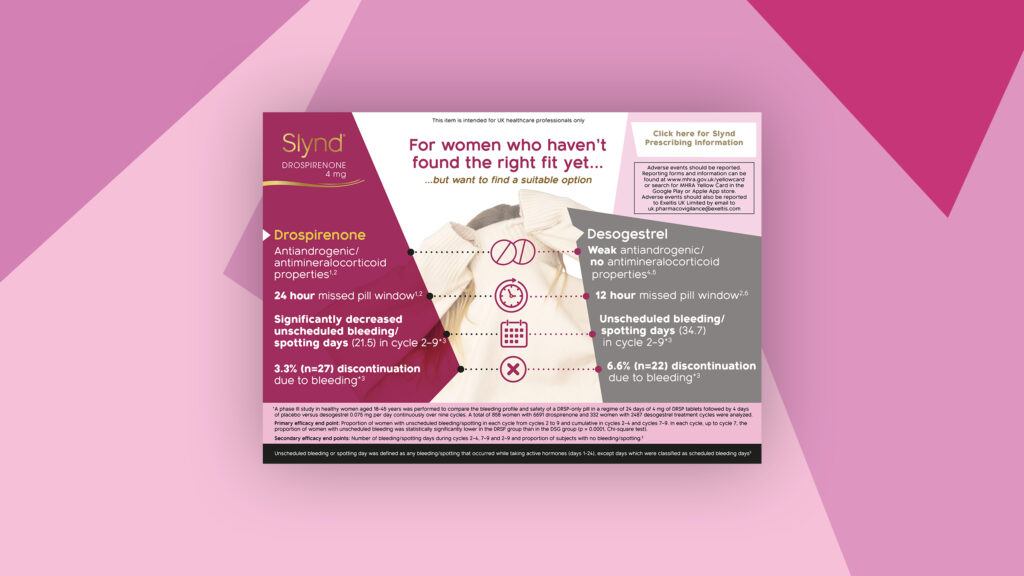
For women who haven’t found the right fit yet…
Contraceptive choice is a personal decision, and every woman will have her own unique needs, values and preferences.
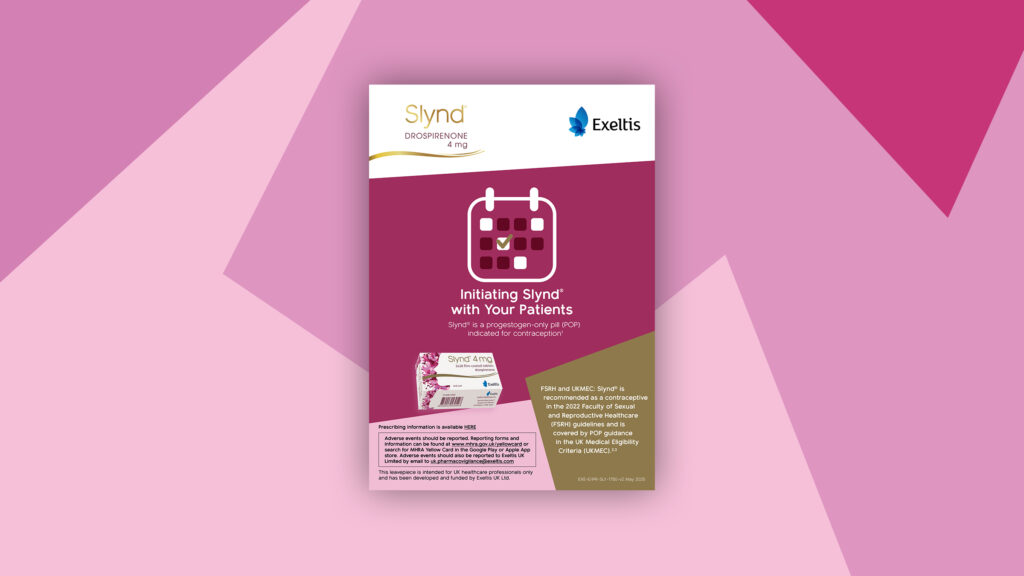
SLYND® is a progestogen-only pill (POP) indicated for contraception – the first oestrogen-free drospirenone POP in the UK.1,2Learn why SLYND® may be the right choice for your patients.
SLYND® offers women:
Drospirenone, which in therapeutic doses possesses mild anti-androgenic and anti-mineralcorticoid activity1,2
24/4 active/placebo dose regimen with a hormone-free interval1,3
SLYND® is a POP recommended as a contraceptive in the 2023 Faculty of Sexual and Reproductive Healthcare (FSRH) Guidelines and is covered by POP guidance in the UK Medical Eligibility Criteria (UKMEC).2
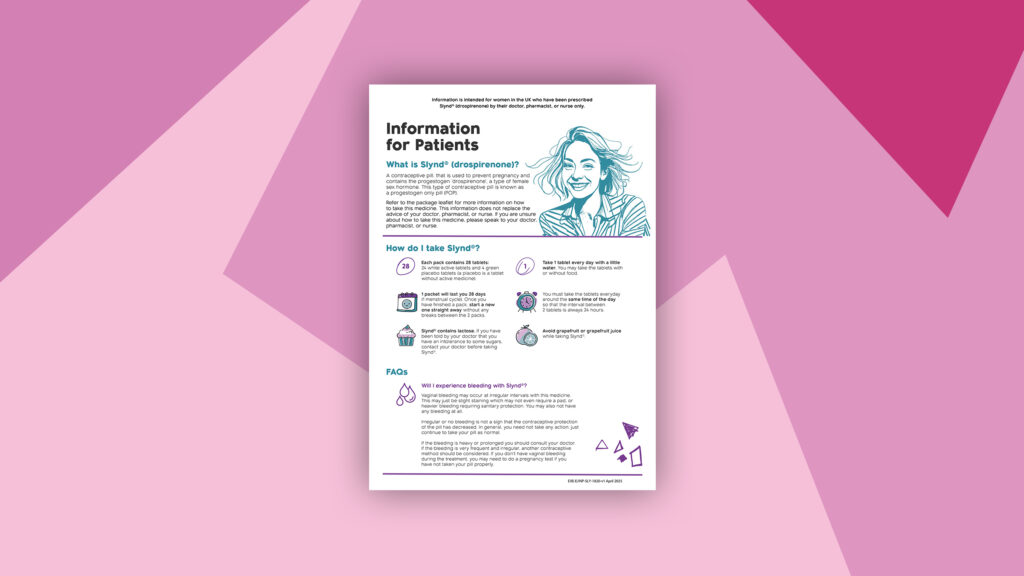
* Each woman’s bleeding experience with SLYND® will differ. As with all POPs, bleeding with SLYND® can be unpredictable. Women may experience scheduled bleeding (during the hormone-free interval), unscheduled bleeding, or no bleeding at all. Women report bleeding with SLYND® to be light or moderate in severity, and both scheduled and unscheduled bleeding have been seen to decrease over the first year of use.2
† SLYND® was generally well tolerated in clinical trials. Common adverse events seen with SLYND® are libido disorder, mood disturbances, headache, nausea, abdominal pain, acne, breast discomfort, metrorrhagia, vaginal haemorrhage, dysmenorrhoea, irregular menstruation, and weight increase.1
Contraception resources
45:23
ON-DEMAND
Managing bleeding issues with hormonal contraception
Dr Diana Mansour offers practical, evidence-based insights on diagnosing and managing unscheduled bleeding with hormonal contraception in primary care, including when to refer to specialist care.
Dr Diana Mansour
Consultant in Community Gynaecology, Newcastle upon Tyne, UK
Adverse events should be reported. Reporting forms and information can be found at www.mhra.gov.uk/yellowcard or search for MHRA Yellow Card in the Google Play or Apple App store. Adverse events should also be reported to Exeltis UK Limited by email to [email protected]
EXE-E/IPR-SLY-1873-v1 | September 2025
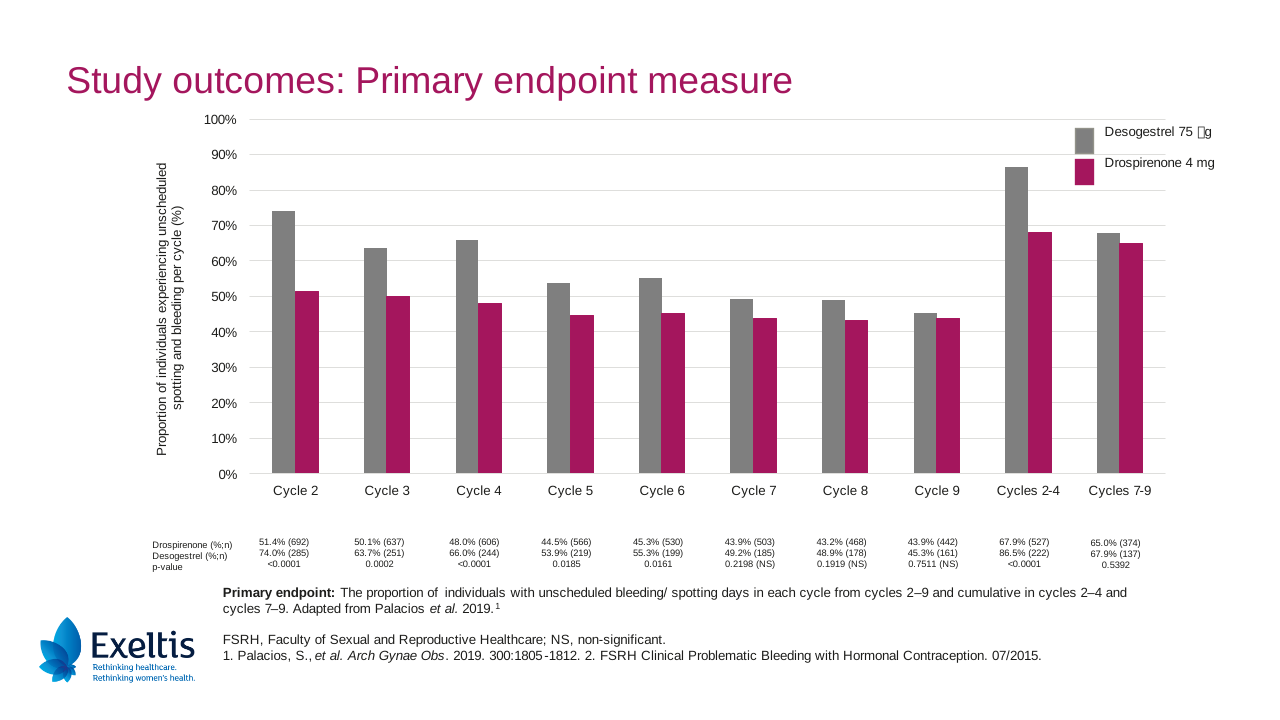
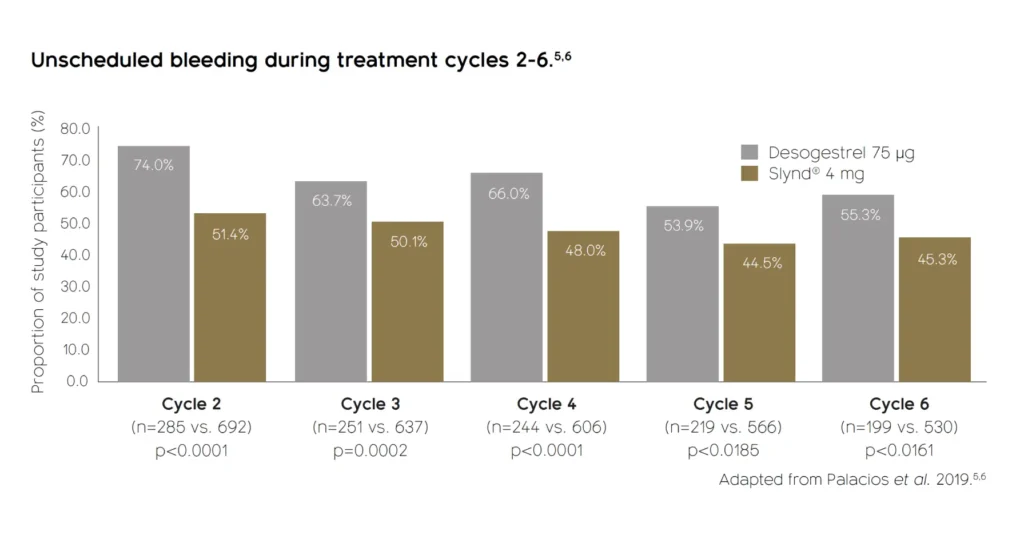
Bleeding with drospirenone can be unpredictable and bleeding experience will differ between individuals. Individuals on drospirenone established lower rates of unscheduled bleeding in the early cycles compared to desogestrel.
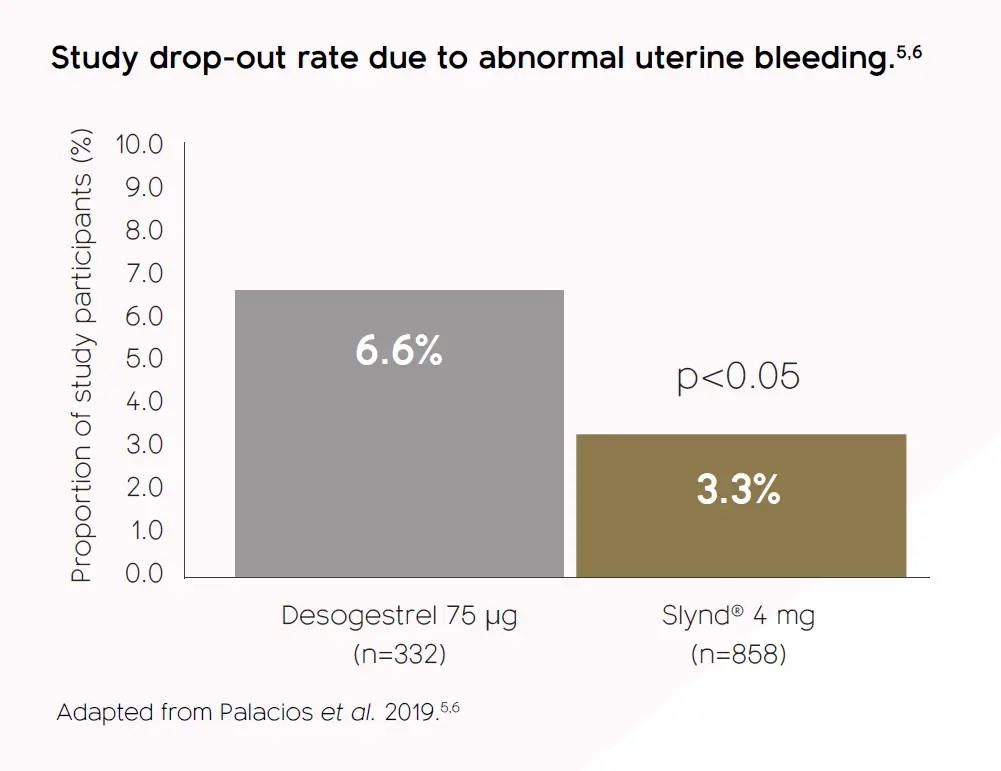
Significantly fewer individuals dropped out of the study in the drospirenone 4 mg group due to abnormal uterine bleeding vs. the desogestrel 75 μg group.
For UK healthcare professionals only
This website includes promotional information and is intended for UK healthcare professionals only. This website has been funded by Exeltis UK
This site is intended for UK healthcare professionals only
To continue, please confirm that you are a UK healthcare professional by selecting one of the buttons below.
You are now leaving https://resources.gpnotebook.com/moving-forward-in-type-2-diabetes-management-with-glp-1ras-resource-hub/. Links to external website are provided as a resource to the viewer. This website is neither owned or controlled by Novo Nordisk.
Novo Nordisk accepts no responsibility for the content or services of the linked site.