
Many people with ADHD pass through general practice undiagnosed, mislabelled or poorly managed, despite often presenting with anxiety, depression, difficulties with engagement, or chaotic life patterns.1,2
This hub collates key educational resources to address this critical gap in Primary Care and to help you learn practical strategies to recognise ADHD in practice, and to optimise its management post-diagnosis.



In this 1-hour, CPD-certified webinar, ADHD experts Dr Heidi Phillips and Dr Peter Mason will explore how to recognise ADHD and optimise its management post-diagnosis using real-world case discussions and clinical trial data. At the end of the session, you will also have a chance to ask our experts your questions in a live Q&A session.
Secure your place now for an upcoming, face-to-face, one-day meeting on Tuesday, 14 October 2025 in London to join our experts in debating the current and future landscapes of ADHD care, and how they may impact you in Primary Care.

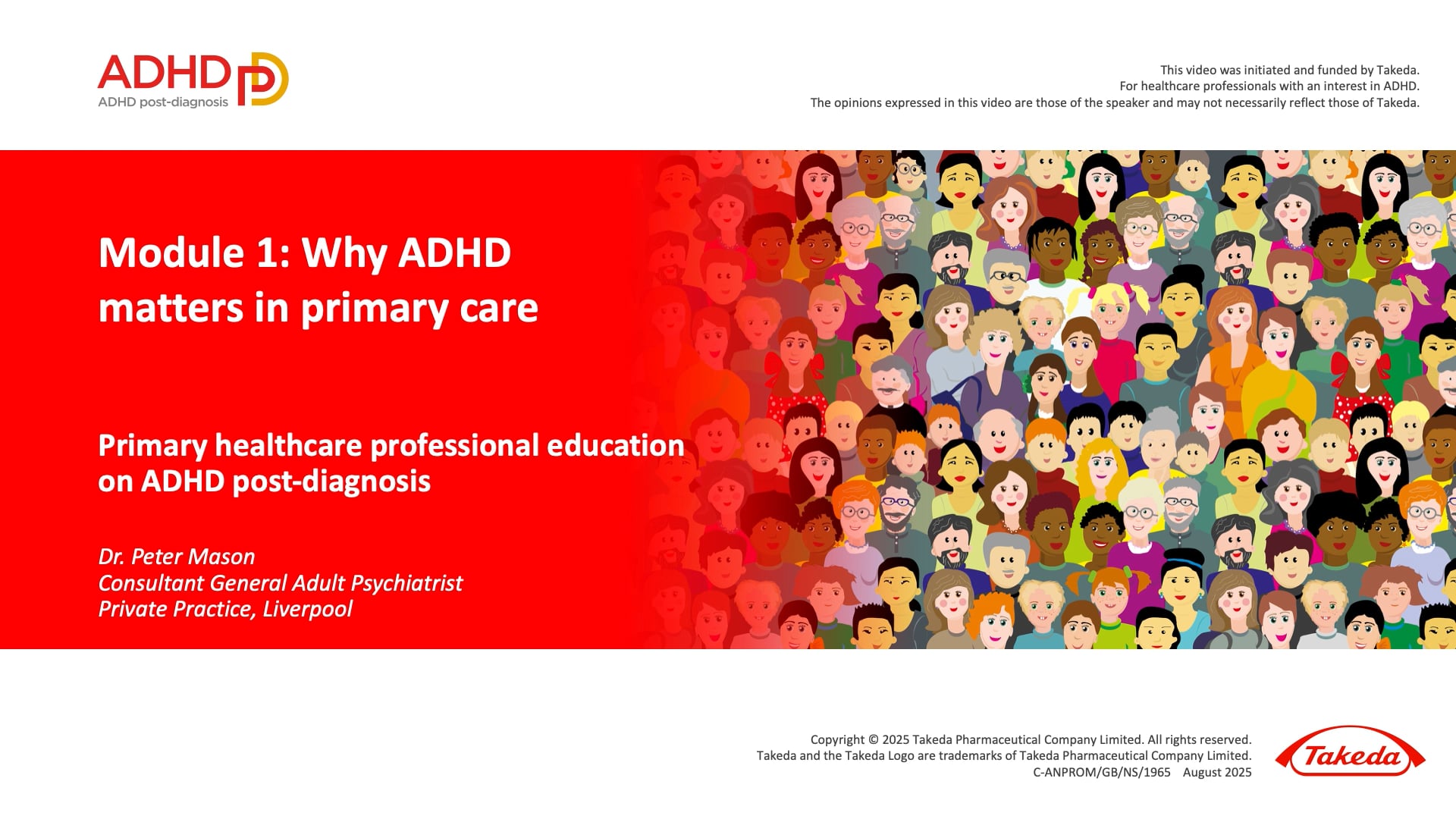
Led by expert clinician Dr Peter Mason, this module uncovers common myths about ADHD and explores the serious consequences it can have for patients and society, with case examples centered around Primary Care.
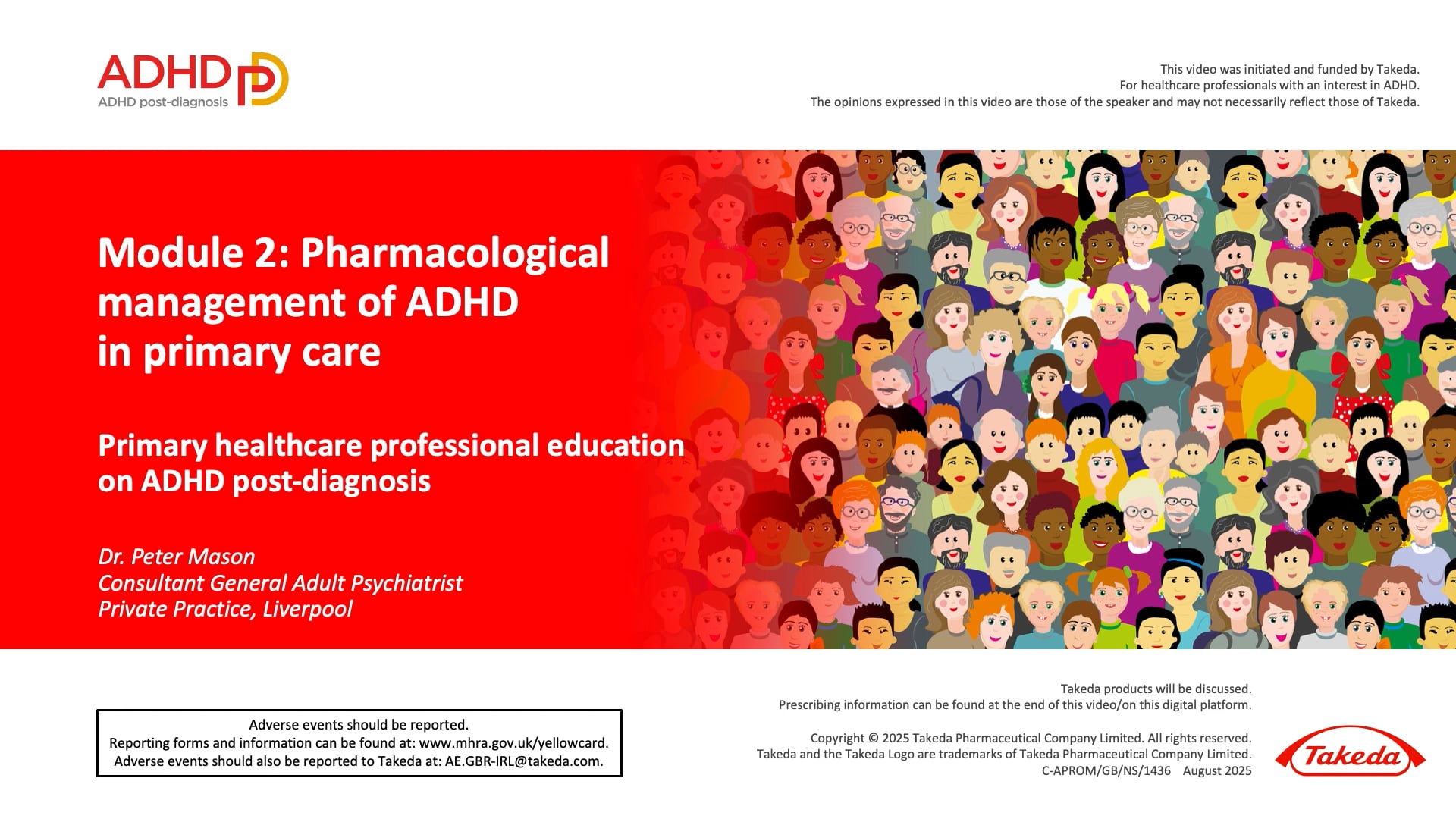
This module outlines key considerations in the pharmacological management of ADHD, including what Primary Care clinicians need to know about prescribed medications, practical insights on treatment reviews, and approaches relevant to Primary Care.
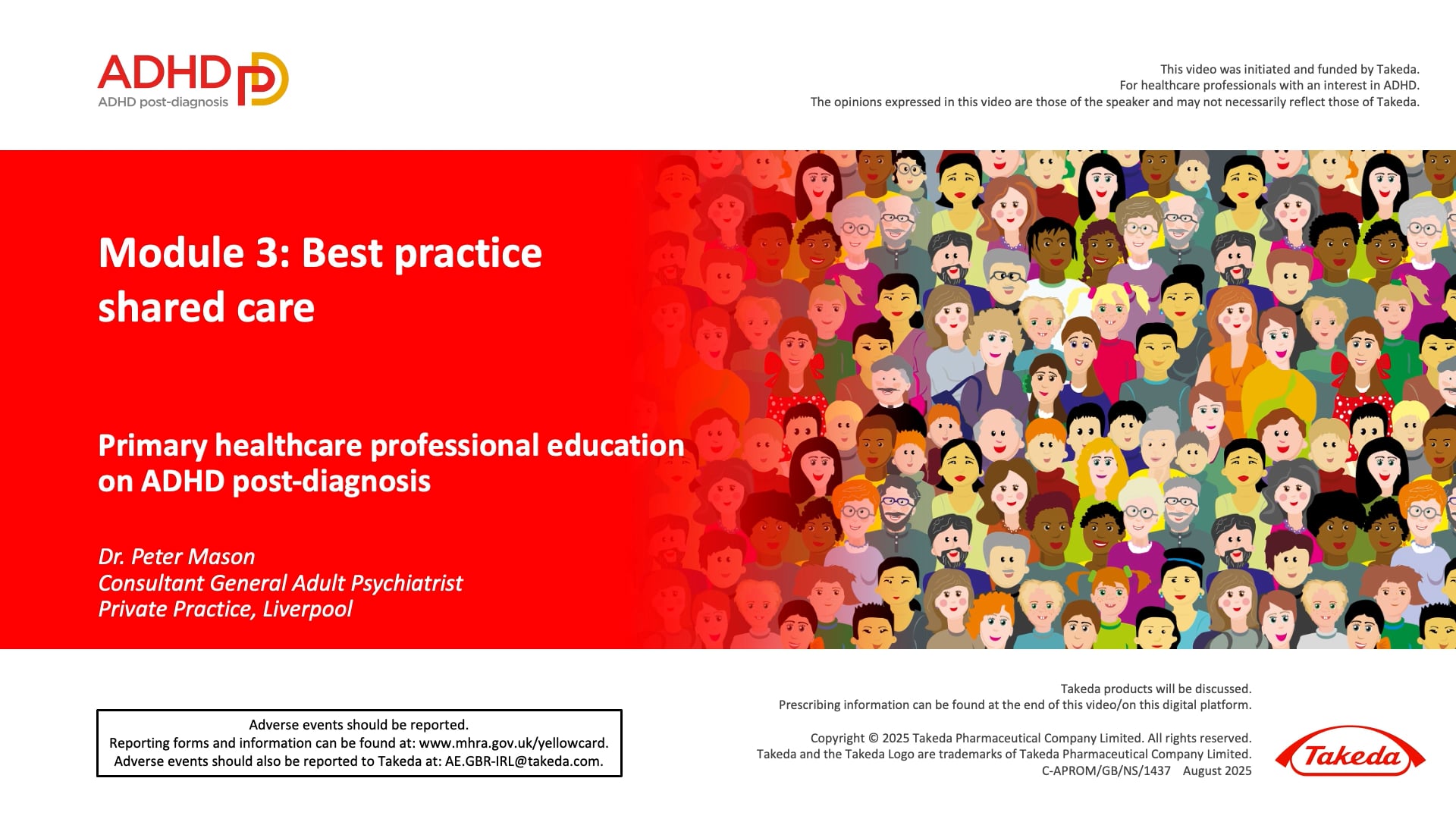
Now putting all the pieces together, this module discusses shared care, approaches to reviewing these agreements and monitoring patients in your care.
This set of advanced modules offers in-depth learning in ADHD. Developed with expert input, the programme provides deeper insights into recognition, diagnosis, and treatment, helping you build confidence and extend your skills. Learn at your own pace while strengthening your portfolio in ADHD care.
You are now leaving GPnotebook. By clicking this link you will be leaving this website and going to a Takeda promotional website.
GPnotebook is not responsible for the contents, processing of personal data of any linked site or any link contained in a linked site, or any changes or updates to such sites. This link is provided to you only as a convenience, and the inclusion of any link does not imply endorsement by GPnotebook of the site.

We deliver a range of educational programmes focused on service development in ADHD, designed to turn innovative ideas into practical, impactful projects that drive sustainable improvements in ADHD care.
Past activities have included:
Register your interest now to stay informed about upcoming courses and events.
You are now leaving GPnotebook. By clicking this link you will be leaving this website and going to a Takeda non-promotional website.
GPnotebook is not responsible for the contents, processing of personal data of any linked site or any link contained in a linked site, or any changes or updates to such sites. This link is provided to you only as a convenience, and the inclusion of any link does not imply endorsement by GPnotebook of the site.

References
1. Young S, et al. Front Psychiatry 2021; 12: 649399
2. Kooij JJS, et al. Eur Psychiatry 2019; 56: 14–34
You are now leaving GPnotebook. By clicking this link you will be leaving this website and going to a Takeda non-promotional website.
GPnotebook is not responsible for the contents, processing of personal data of any linked site or any link contained in a linked site, or any changes or updates to such sites. This link is provided to you only as a convenience, and the inclusion of any link does not imply endorsement by GPnotebook of the site.
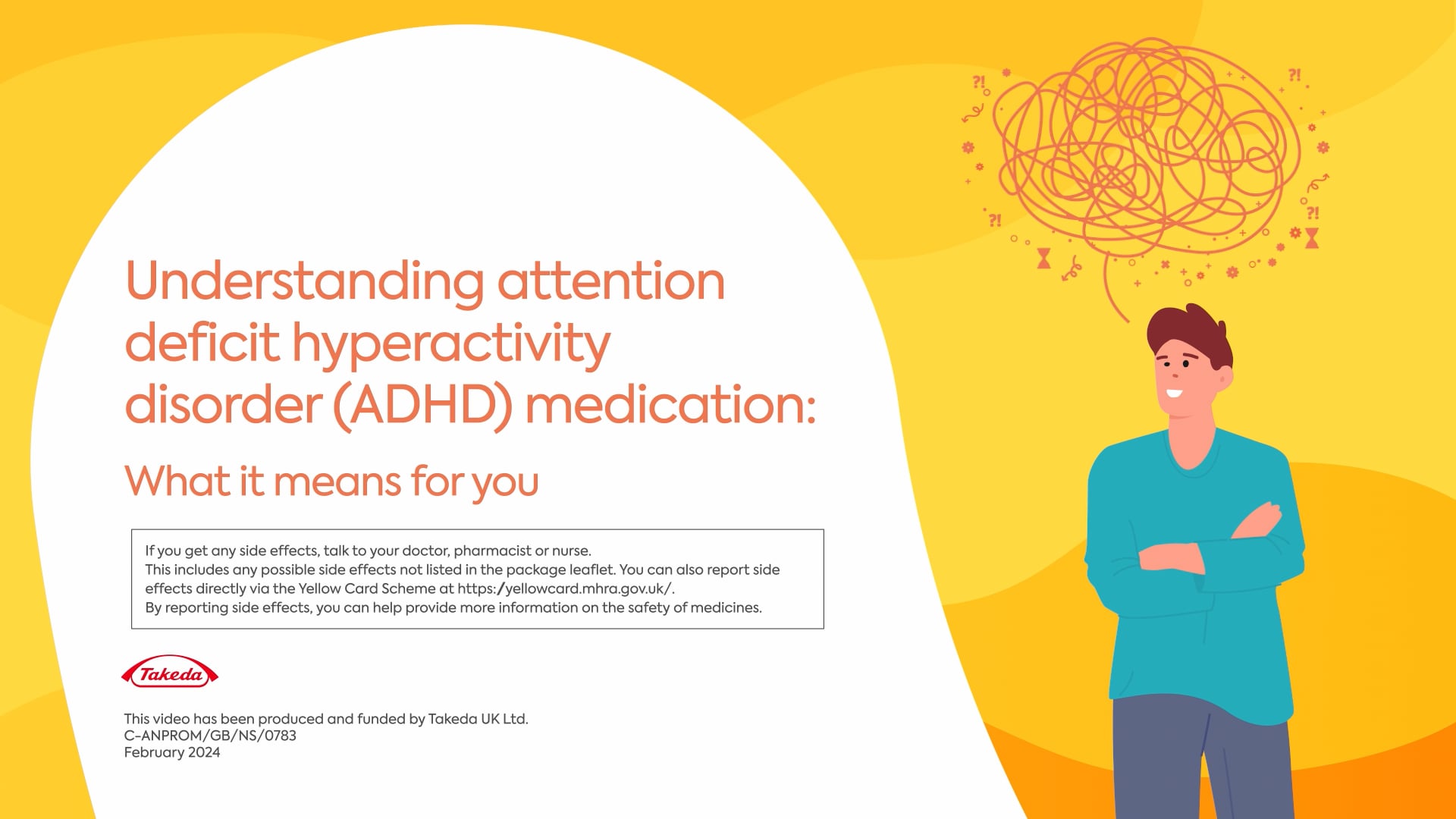
You are now leaving GPnotebook. By clicking this link you will be leaving this website and going to a Takeda promotional website.
GPnotebook is not responsible for the contents, processing of personal data of any linked site or any link contained in a linked site, or any changes or updates to such sites. This link is provided to you only as a convenience, and the inclusion of any link does not imply endorsement by GPnotebook of the site.

Click here for Elvanse® (lisdexamfetamine dimesylate) prescribing information.
Click here for Equasym® XL (methylphenidate hydrochloride) prescribing information.
Click here for Intuniv®▼ (guanfacine hydrochloride) prescribing information.
For adverse event reporting information related to Elvanse and Equasym XL:
Adverse event reporting information related to Intuniv▼:
Adverse events should be reported to the Medicines and Healthcare products Regulatory Agency.
Reporting forms and information can be found at: www.mhra.gov.uk/yellowcard.
Adverse events should also be reported to Takeda at:
[email protected].
▼This medicinal product is subject to additional monitoring. This will allow quick identification of new safety information. Adverse events should be reported. Reporting forms and information can be found at: www.mhra.gov.uk/yellowcard.
Adverse events should also be reported to Takeda at:
[email protected].
C-APROM/GB/ELVS/0117 | March 2026

PI links:
Elvanse – emc prescribing information
Equasym XL – emc prescribing information
Intuniv – emc prescribing information
This site is intended for UK healthcare professionals only
To continue, please confirm that you are a UK healthcare professional by selecting one of the buttons below.