This promotional website has been developed, organised and funded by Boehringer Ingelheim. The media partners for this activity are GPnotebook and Diabetes on the net. GPnotebook and Diabetes on the net have had no input into the content of this website.
It is important to conduct a pre-Ramadan assessment 6–8 weeks prior to Ramadan for adults with diabetes who wish to undertake fasting during this time6
Did you know?
In a study of 12,529 Muslims with type 2 diabetes, 85.1% fasted during Ramadan despite being exempt due to their medical condition7
What should I do next?
If an adult with type 2 diabetes in your clinic still wishes to fast despite being exempt due to their medical condition, consider accessing resources from Alia Gilani that explore the steps to best support these people
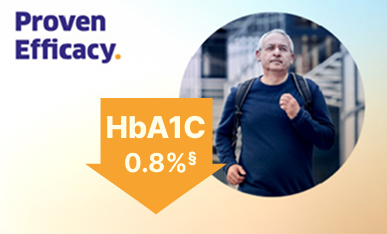
Proven efficacy vs placebo:1,8 The efficacy and
safety of 5 mg linagliptin was evaluated in eight
phase III randomised controlled trials. Linagliptin
once daily demonstrated clinically significant
improvements in glycaemic control vs placebo
or comparator.1
Demonstrated CV and kidney safety profile
Long-term cardiovascular and kidney safety
profile of TRAJENTA® has been
demonstrated in two cardiovascular outcome trials.9-15 As TRAJENTA® is primarily excreted via the bile, it is suitable for a broad range of adults with type 2 diabetes
independent of renal function.1
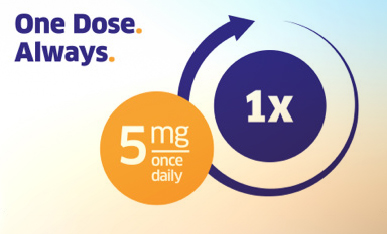
Unique convenience of one
dose, once daily1
The recommended dose of TRAJENTA® for adult
patients with type 2 diabetes is 5 mg once daily,
independent of renal and hepatic function, body
mass index, age, ethnicity, background type 2
diabetes therapy, and disease duration.1,15
Trajenta is indicated in adults with type 2 diabetes mellitus as an adjunct to diet and exercise to improve glycaemic control as: • monotherapy when metformin is inappropriate due to intolerance, or contraindicated due to renal impairment • in combination with other medicinal products for the treatment of diabetes, including insulin, when these do not provide adequate glycaemic control
The content has been reviewed and approved by the sponsoring company prior to its publication. Editorial support for this website has been provided by OmniaMed Communications.
You are now leaving https://resources.gpnotebook.com/moving-forward-in-type-2-diabetes-management-with-glp-1ras-resource-hub/. Links to external website are provided as a resource to the viewer. This website is neither owned or controlled by Novo Nordisk.
Novo Nordisk accepts no responsibility for the content or services of the linked site.